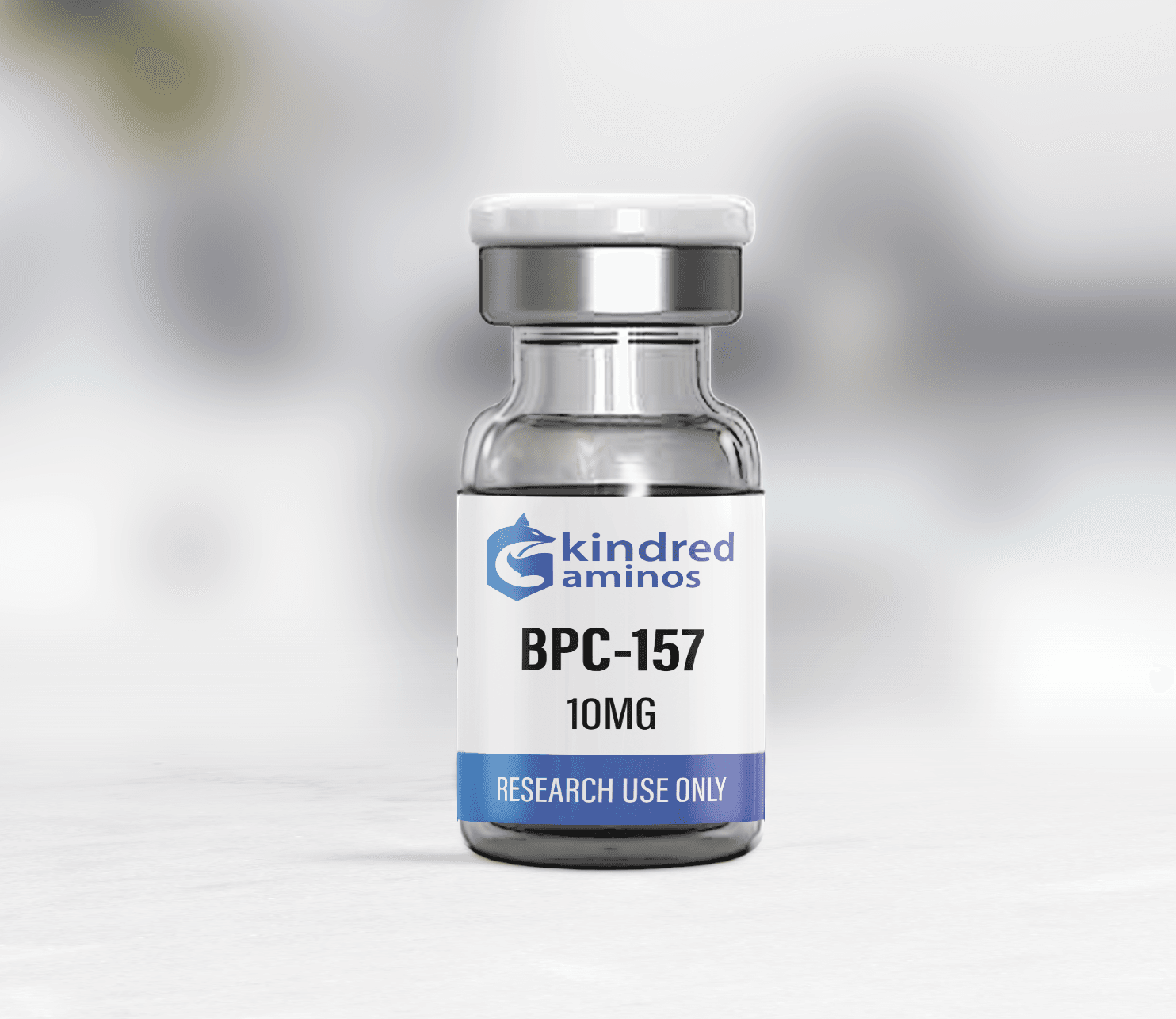
BPC-157
Select Size
$39.99
A synthetic pentadecapeptide derived from a protective protein found in human gastric juice. BPC-157 has demonstrated cytoprotective and wound-healing properties across gastrointestinal, musculoskeletal, and neurological models, acting through VEGF-mediated angiogenesis and nitric oxide system modulation.
Certificate of Analysis
Third-party verified · HPLC & Mass Spectrometry
Purity
99.111%
Search Code
Alph2602150137
Test Date
Feb 17, 2026
Laboratory
Freedom Diagnostics
Compound Details
Mechanism of Action
Promotes angiogenesis via VEGF/VEGFR2 signaling. Modulates the nitric oxide (NO) system to support endothelial function. Interacts with the dopaminergic system and has demonstrated cytoprotective effects on gastric mucosa, tendons, ligaments, and muscle tissue.
Molecular Profile
- Molecular Weight
- 1,419.53 Da
- Sequence
- GEPPPGKPADDAGLV (15 amino acids)
- Purity Spec
- ≥98% by HPLC
Storage
Store lyophilized at −20°C. Reconstituted: 2–8°C, use within 30 days. Avoid repeated freeze-thaw cycles.
Research Applications
Published Research
Peer-reviewed studies from PubMed.
- Stable gastric pentadecapeptide BPC 157 as therapy after surgical detachment of the quadriceps muscle for muscle-to-bone reattachment in rats2025Musculoskeletal
BPC 157 promoted quadriceps muscle-to-bone reattachment after surgical detachment in rats, with consistent healing confirmed via ultrasonic, MRI, biomechanical, and functional assessments. Walking patterns normalized and leg contracture was eliminated within 3 months.
- Successful muscle-to-bone reattachment confirmed across four independent assessment methods
- Normalized gait and eliminated limb contracture within 3 months of treatment
- Extends BPC 157 tissue-repair evidence from tendons and ligaments to muscle-bone junctions
- Stable gastric pentadecapeptide BPC 157: novel therapy in gastrointestinal tract2011Gastrointestinal
Comprehensive review of BPC 157 as a novel therapy for gastrointestinal tract conditions, with pleiotropic beneficial activity and no reported toxicity across numerous experimental models.
- Effective across multiple GI pathology models including ulcers, fistulas, and inflammatory bowel disease
- No reported toxicity even at high doses in preclinical studies
- Mechanism involves interaction with NO system, dopamine system, and prostaglandin pathways
- The promoting effect of pentadecapeptide BPC 157 on tendon healing involves tendon outgrowth, cell survival, and cell migration2011Tissue Repair
BPC 157 accelerates healing of transected rat Achilles tendon and stimulates tendocyte growth in vitro; the effect involves tendon outgrowth, cell survival, and cell migration.
- Significantly accelerated Achilles tendon healing in rat transection model
- Stimulated cultured tendon fibroblast outgrowth and migration in vitro
- Enhanced cell survival signaling via FAK and paxillin phosphorylation
- Pentadecapeptide BPC 157 enhances the growth hormone receptor expression in tendon fibroblasts2014Tissue Repair
BPC 157 upregulates growth hormone receptor expression in rat tendon fibroblasts, suggesting a mechanism for its tendon-healing effects through growth hormone signaling pathways.
- Upregulated GH receptor mRNA and protein in tendon fibroblasts
- Effect was dose-dependent and observed within 24 hours
- Provides a mechanistic link between BPC 157 and tissue growth/repair
- BPC 157 and blood vessels2019Vascular
Review of BPC 157’s vascular effects: promotes angiogenesis, protects endothelium, and counteracts vascular disruption in multiple injury models including thrombosis and ischemia-reperfusion.
- Promotes VEGF-mediated angiogenesis and new blood vessel formation
- Protects against endothelial damage from various insults
- Demonstrates vessel-protective activity in thrombosis and ischemia models
Clinical trial context for BPC 157 in inflammatory bowel disease. Reviews preclinical evidence and safety data supporting human trials for ulcerative colitis.
- Supports transition from preclinical to clinical IBD research
- Favorable safety profile across all preclinical toxicology studies
- Effective in TNBS-colitis and cysteamine-duodenal ulcer models