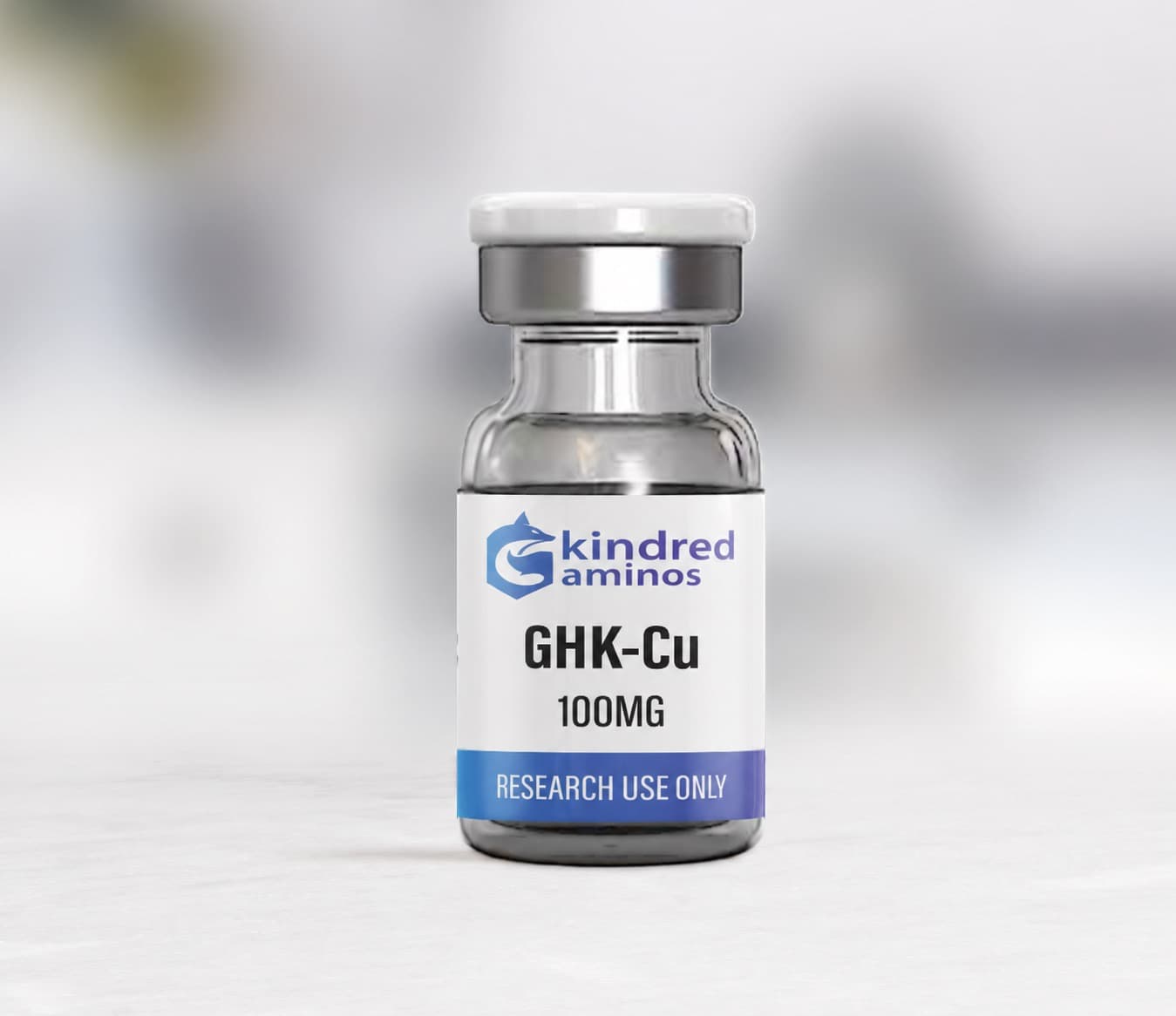
GHK-Cu
Select Size
$39.99
A naturally occurring copper-binding tripeptide (glycyl-L-histidyl-L-lysine) found in human plasma, saliva, and urine. GHK-Cu levels decline with age, and exogenous administration has been shown to stimulate collagen synthesis, accelerate wound healing, and modulate expression of genes involved in tissue remodeling.
Certificate of Analysis
Third-party verified · HPLC & Mass Spectrometry
Purity
99.789%
Search Code
Alph2602150142
Test Date
Feb 17, 2026
Laboratory
Freedom Diagnostics
Compound Details
Mechanism of Action
Chelates copper(II) ions with high affinity and delivers them to tissues, activating copper-dependent enzymes including lysyl oxidase (collagen cross-linking) and superoxide dismutase (antioxidant defense). Modulates expression of over 4,000 genes involved in tissue remodeling, including upregulation of collagen, elastin, and glycosaminoglycan synthesis.
Molecular Profile
- Molecular Weight
- 403.93 Da (free) / 467.04 Da (Cu²⁺ complex)
- Sequence
- GHK (Gly-His-Lys, 3 amino acids)
- Purity Spec
- ≥98% by HPLC
Storage
Store lyophilized at −20°C. Reconstituted: 2–8°C, use within 30 days. Stable in aqueous solution at physiological pH.
Research Applications
Published Research
Peer-reviewed studies from PubMed.
- Exploring the beneficial effects of GHK-Cu on an experimental model of colitis and the underlying mechanisms2025Anti-Inflammatory
GHK-Cu demonstrated significant anti-inflammatory and protective effects in an experimental colitis model, extending its known tissue-repair properties to gastrointestinal inflammation and mucosal healing.
- Reduced colitis severity scores and inflammatory markers in experimental model
- Protective effects on intestinal mucosal integrity and barrier function
- Extends GHK-Cu research applications from skin/wound healing to GI inflammation
- Effects of topical copper tripeptide complex on wound healing in an irradiated rat model2013Wound Healing
Evaluates topical GHK-Cu on irradiated rat dorsal flaps; reports increased vascularization and VEGF expression in a compromised wound-healing model.
- Increased VEGF expression and neovascularization in irradiated wounds
- Improved wound closure rates compared to control in compromised tissue
- Demonstrates efficacy even in radiation-impaired healing environments
Comprehensive review of GHK and GHK-Cu: stimulation of collagen, elastin, and connective tissue accumulation; broad relevance to wound healing, skin repair, and tissue remodeling.
- GHK-Cu stimulates collagen I, III, and elastin synthesis in fibroblasts
- Promotes decorin and glycosaminoglycan production for matrix integrity
- Attracts immune cells and promotes wound debridement and repair
- GHK-Cu may prevent oxidative stress in skin by regulating copper and modifying expression of numerous antioxidant genes2012Gene Expression
Gene expression analysis reveals GHK-Cu upregulates antioxidant genes and downregulates pro-inflammatory genes, suggesting a protective role against oxidative stress and UV damage in skin.
- Modulated expression of 4,000+ human genes in cultured fibroblasts
- Upregulated antioxidant genes including SOD and glutathione peroxidase
- Downregulated pro-inflammatory and tissue-destructive gene networks
- Regenerative and protective actions of the GHK-Cu peptide in the light of the new gene data2014Gene Expression
Analysis using the Broad Institute Connectivity Map reveals GHK-Cu’s gene expression signature overlaps with tissue-remodeling, anti-cancer, and neuroprotective pathways, extending its potential research applications.
- Gene signature analysis via Connectivity Map reveals broad regenerative profile
- Overlapping expression patterns with anti-fibrotic and anti-inflammatory compounds
- Suggests neuroprotective and anti-cancer research potential beyond skin repair
GHK peptide induces neural differentiation in human bone-marrow-derived mesenchymal stem cells, demonstrating neurogenic potential relevant to neuroscience and regenerative medicine research.
- Induced neural differentiation markers in mesenchymal stem cells
- Effect was concentration-dependent and reproducible
- Opens research applications in neural regeneration and stem cell biology