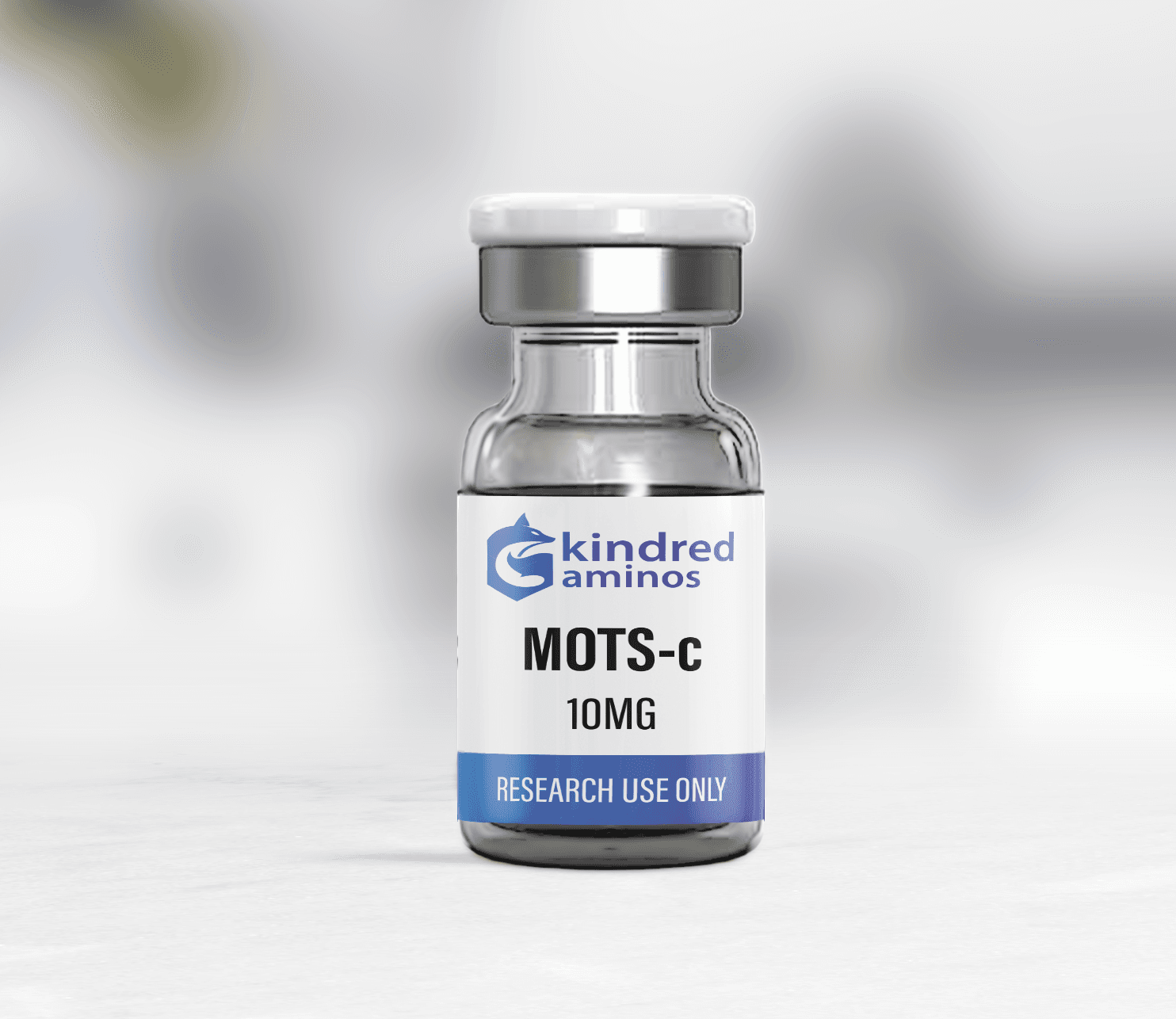
MOTS-c
Select Size
$59.99
A mitochondrial-derived peptide encoded within the 12S rRNA gene of mitochondrial DNA. MOTS-c is the first mitochondrial-encoded peptide shown to regulate nuclear gene expression and systemic metabolic homeostasis, acting as a retrograde signaling molecule between mitochondria and the nucleus.
Certificate of Analysis
Third-party verified · HPLC & Mass Spectrometry
Purity
99.631%
Search Code
Alph2602150138
Test Date
Feb 17, 2026
Laboratory
Freedom Diagnostics
Compound Details
Mechanism of Action
Activates AMPK (AMP-activated protein kinase) via inhibition of the folate-methionine cycle, increasing AICAR accumulation. Translocates to the nucleus under metabolic stress to regulate adaptive gene expression. Enhances glucose uptake and fatty acid oxidation in skeletal muscle independent of insulin signaling.
Molecular Profile
- Molecular Weight
- 2,174.55 Da
- Sequence
- MRWQEMGYIFYPRKLR (16 amino acids)
- Purity Spec
- ≥98% by HPLC
Storage
Store lyophilized at −20°C. Reconstituted: 2–8°C, use within 14 days. Highly sensitive to oxidation — reconstitute under inert gas if possible.
Research Applications
Published Research
Peer-reviewed studies from PubMed.
- Mitochondrial-encoded peptide MOTS-c prevents pancreatic islet cell senescence to delay diabetes2025Diabetes
MOTS-c prevents senescence in pancreatic islet cells and delays diabetes progression. Circulating MOTS-c levels are significantly lower in type 2 diabetes patients, and exogenous MOTS-c improved glucose tolerance and reduced islet cell aging markers in diabetic mouse models.
- MOTS-c levels decline with age specifically in pancreatic islet cells
- Treatment reduced senescence markers and improved glucose tolerance in diabetic mice
- Circulating MOTS-c is significantly lower in T2D patients vs healthy controls
Identified the first direct molecular target of MOTS-c: the protein kinase CK2. MOTS-c binds and activates CK2 in skeletal muscle, revealing a specific mechanism for its effects on muscle function and exercise physiology.
- CK2 identified as the first direct binding target of MOTS-c
- MOTS-c activates CK2 kinase activity in skeletal muscle tissue
- Provides a specific molecular mechanism for MOTS-c’s exercise-mimetic effects
- The mitochondrial-derived peptide MOTS-c promotes metabolic homeostasis and reduces obesity and insulin resistance2015Metabolic
Discovery paper: MOTS-c, a mitochondrial-encoded peptide, improves insulin sensitivity and metabolic function and protects against diet-induced obesity and insulin resistance in mice.
- First identification of MOTS-c as a mitochondrial-derived signaling peptide
- Prevented diet-induced obesity and insulin resistance in mouse models
- Acts via AMPK activation through folate-methionine cycle inhibition
MOTS-c is endogenously upregulated by exercise and its administration improves physical performance in young, middle-aged, and old mice — positioning it as an exercise mimetic.
- Exercise induces endogenous MOTS-c expression in skeletal muscle
- Exogenous MOTS-c improved physical capacity across all age groups
- MOTS-c translocates to the nucleus to regulate stress-adaptive genes
Review of mitochondrial-derived peptides (MDPs) including MOTS-c and humanin: their roles in metabolic signaling, stress response, and potential as therapeutic targets for metabolic disease.
- MDPs represent a novel class of retrograde mitochondrial signals
- MOTS-c and humanin have complementary but distinct metabolic roles
- Declining MDP levels with age may contribute to metabolic dysfunction
- MOTS-c peptide increases survival and decreases bacterial load in mice infected with MRSA2022Immunology
MOTS-c demonstrated antimicrobial activity against methicillin-resistant Staphylococcus aureus (MRSA) in vivo, reducing bacterial load and improving survival in infected mice.
- Improved survival in MRSA-infected mouse models
- Reduced bacterial load in blood and organs
- Suggests an immunomodulatory role beyond metabolic functions