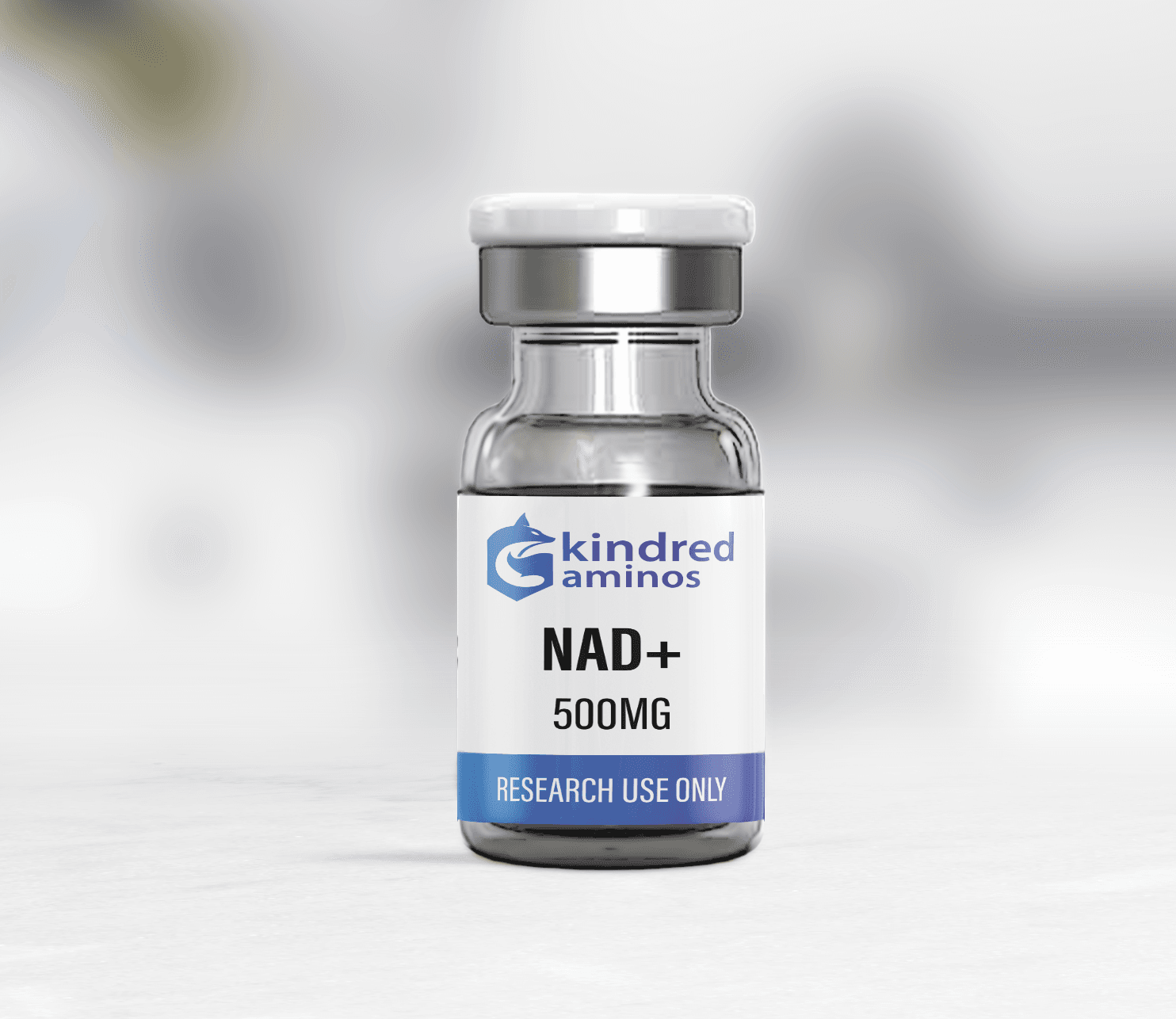
NAD+
Select Size
$44.99
Nicotinamide adenine dinucleotide is a core redox cofactor required for mitochondrial respiration, DNA repair, and cellular stress response networks. Supplemental NAD+ research focuses on bioenergetics, PARP and sirtuin-linked pathways, and age-associated decline in metabolic resilience.
Certificate of Analysis
Third-party verified · HPLC & Mass Spectrometry
Purity
99.545%
Search Code
Alph2602150132
Test Date
Feb 17, 2026
Laboratory
Freedom Diagnostics
Compound Details
Mechanism of Action
NAD+ functions as an electron carrier in glycolysis and oxidative phosphorylation while also serving as a substrate for enzymes including sirtuins, PARPs, and CD38, linking energy state to transcriptional control and DNA damage response.
Molecular Profile
- Molecular Weight
- 663.43 Da
- Purity Spec
- >=99% by HPLC
Storage
Store lyophilized at -20C, protected from moisture. Reconstituted solutions: 2-8C and use promptly per protocol due to hydrolysis sensitivity.
Research Applications
Published Research
Peer-reviewed studies from PubMed.
- Roles of NAD + in Health and Aging2023Review
Review of NAD+ biology across metabolic control, cellular resilience, and aging. Describes how NAD+ decline intersects with mitochondrial dysfunction and age-associated disease phenotypes.
- NAD+ is central to redox metabolism and energy homeostasis
- Age-related NAD+ decline is linked to multiple functional impairments
- Highlights NAD-targeted strategies for healthy-aging research
- NAD+ in DNA repair and mitochondrial maintenance2017Mechanism
Mechanistic overview connecting NAD+ availability to PARP-driven DNA repair and mitochondrial quality control pathways, including crosstalk with sirtuin signaling.
- Defines NAD+ as a required substrate for PARP-dependent DNA repair
- Links NAD+ depletion to impaired mitochondrial maintenance programs
- Describes interaction between PARP activity and sirtuin-mediated resilience
Comprehensive review of NAD+ biosynthesis and utilization pathways, emphasizing implications for cellular senescence, metabolic stress adaptation, and age-related pathology.
- Summarizes salvage and de novo NAD+ pathway biology
- Connects NAD+ homeostasis to senescence and stress-response programs
- Supports NAD+ pathway modulation as a broad research target