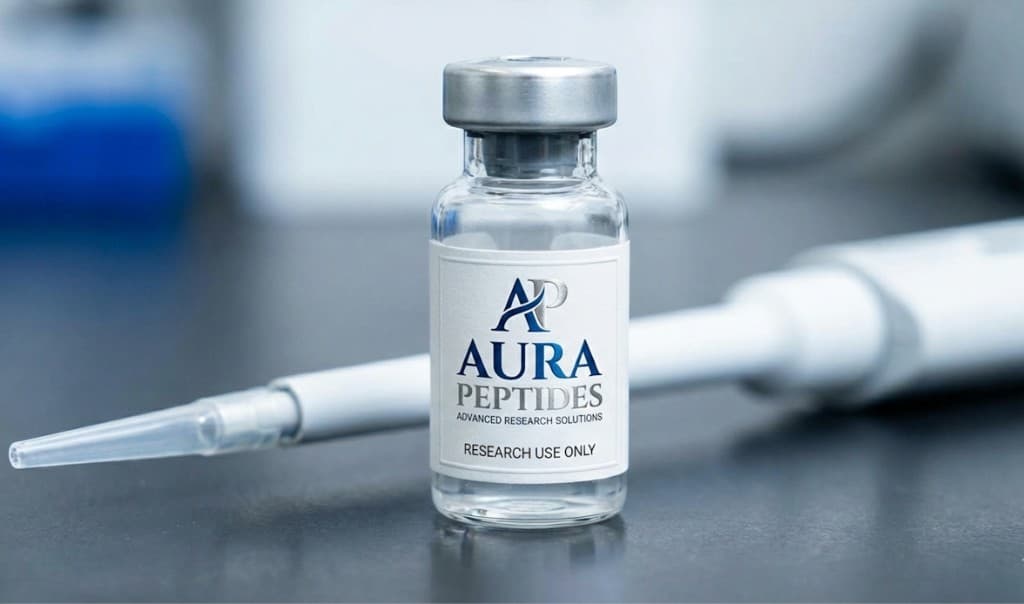
Retatrutide
$174.99
A novel triple-receptor agonist targeting GIP, GLP-1, and glucagon receptors simultaneously. Retatrutide represents the next generation of incretin-based research compounds, with Phase 2 trial data showing dose-dependent weight reduction of up to 24.2% over 48 weeks.
Certificate of Analysis
Third-party verified · HPLC & Mass Spectrometry
Purity
98.87%
Lot Number
AUR-RETA-250205
Test Date
Feb 5, 2025
Laboratory
Janssen Analytik GmbH
Compound Details
Mechanism of Action
Triple agonist engaging GIP, GLP-1, and glucagon receptors. GIP and GLP-1 receptor activation drives incretin-mediated insulin secretion and appetite suppression. Glucagon receptor activation increases energy expenditure and hepatic lipid oxidation, providing a thermogenic component absent from dual agonists.
Molecular Profile
- Molecular Weight
- 4,468.10 Da
- Purity Spec
- ≥98% by HPLC
Storage
Store lyophilized at −20°C. Reconstituted: 2–8°C, use within 21 days. Sensitive to heat — do not expose to temperatures above 25°C.
Research Applications
Published Research
Peer-reviewed studies from PubMed.
First Phase 3 result for retatrutide: TRIUMPH-4 demonstrated 28.7% mean body weight loss at the 12 mg dose over 68 weeks in adults with obesity and knee osteoarthritis, along with a 75.8% reduction in WOMAC pain scores — the largest weight loss reported for any anti-obesity agent in a Phase 3 trial.
- 28.7% mean body weight loss (71.2 lbs) at 12 mg over 68 weeks
- 75.8% reduction in WOMAC knee pain scores; 12% of patients pain-free
- 58.6% of 12 mg group achieved ≥25% weight loss; 39.4% achieved ≥30%
- 14.0 mmHg systolic blood pressure reduction at highest dose
Phase 2 trial: retatrutide (GIP/GLP-1/glucagon triple agonist) once weekly for 48 weeks produced the largest weight reductions seen in any anti-obesity medication trial — up to 24.2% at the 12 mg dose.
- 24.2% mean body weight reduction at 12 mg dose over 48 weeks
- Dose-dependent weight loss across all treatment arms
- 100% of participants on 12 mg achieved ≥5% weight loss
- Retatrutide, a GIP, GLP-1 and glucagon receptor agonist, for people with type 2 diabetes2023Metabolic
Phase 2 trial in adults with type 2 diabetes: retatrutide showed clinically meaningful HbA1c improvements and robust, dose-dependent bodyweight reductions with a safety profile consistent with incretin-based therapies.
- HbA1c reductions up to −2.02% at the highest dose
- Bodyweight reductions up to 16.94% in participants with T2D
- Glucagon receptor component adds energy expenditure not seen in dual agonists
Preclinical evidence that adding glucagon receptor agonism to GLP-1 agonism increases energy expenditure, hepatic lipid oxidation, and weight loss beyond incretin effects alone — the mechanistic basis for triple agonists.
- Glucagon receptor activation increases hepatic fatty acid oxidation
- Combined GLP-1 + glucagon agonism increases energy expenditure 15–20%
- Glucagon-driven thermogenesis enhances weight loss beyond appetite suppression alone
Review of the triple agonist landscape: rationale for combining GIP, GLP-1, and glucagon receptor activation, comparative analysis with dual agonists, and future directions for metabolic disease research.
- Triple agonism addresses limitations of dual-agonist approaches
- Glucagon receptor component specifically targets hepatic steatosis
- Phase 2 data suggest potential best-in-class weight loss efficacy