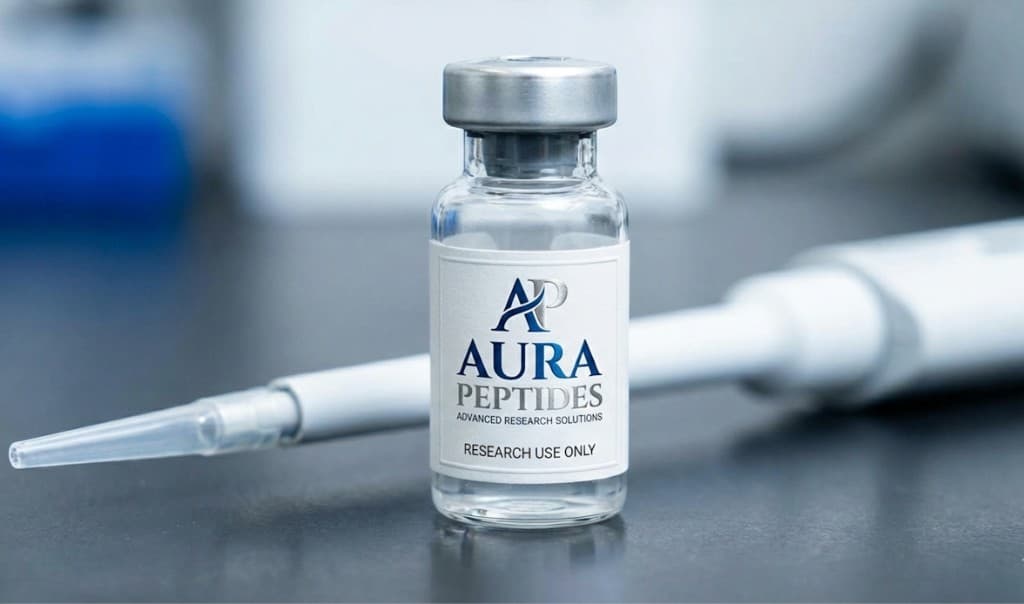
Semaglutide
$149.99
A long-acting GLP-1 receptor agonist with 94% homology to native human GLP-1. Modified with a C-18 fatty acid chain for extended albumin binding and a half-life of approximately 7 days, enabling once-weekly administration. Extensively studied in metabolic and cardiovascular research.
Certificate of Analysis
Third-party verified · HPLC & Mass Spectrometry
Purity
99.31%
Lot Number
AUR-SEMA-250210
Test Date
Feb 10, 2025
Laboratory
Janssen Analytik GmbH
Compound Details
Mechanism of Action
Binds and activates the GLP-1 receptor, enhancing glucose-dependent insulin secretion, suppressing glucagon release, slowing gastric emptying, and reducing appetite via hypothalamic signaling. The C-18 fatty di-acid side chain enables strong albumin binding for prolonged activity.
Molecular Profile
- Molecular Weight
- 4,113.58 Da
- Purity Spec
- ≥99% by HPLC
Storage
Store lyophilized at −20°C. Reconstituted: 2–8°C, use within 28 days. Do not freeze reconstituted solution.
Research Applications
Published Research
Peer-reviewed studies from PubMed.
STEP UP Phase 3b trial: a higher 7.2 mg dose of semaglutide produced 18.7% mean weight loss at 72 weeks (vs 15.6% for 2.4 mg and 3.9% for placebo), with nearly half of participants achieving ≥20% weight loss.
- 18.7% mean weight loss at 7.2 mg vs 15.6% at 2.4 mg over 72 weeks
- Participants on 7.2 mg were 27x more likely to achieve ≥20% weight loss vs placebo
- 11.7 cm waist circumference reduction beyond placebo at highest dose
Landmark SELECT trial (n=17,604): semaglutide 2.4 mg reduced major adverse cardiovascular events by 20% in patients with established CVD and obesity but without diabetes — the first cardiovascular outcomes benefit demonstrated for a GLP-1 agonist in a non-diabetic population.
- 20% reduction in MACE (HR 0.80, 95% CI 0.72–0.90, P<0.001)
- MACE occurred in 6.5% semaglutide vs 8.0% placebo over mean 39.8-month follow-up
- First evidence of GLP-1 agonist cardiovascular benefit independent of diabetes status
Landmark STEP 1 trial: once-weekly semaglutide 2.4 mg produced a mean 14.9% body weight reduction vs 2.4% with placebo over 68 weeks in adults with overweight or obesity.
- 14.9% mean body weight loss vs 2.4% placebo at 68 weeks
- 86.4% of participants achieved ≥5% weight loss
- Significant improvements in cardiometabolic risk factors
- Semaglutide and Cardiovascular Outcomes in Patients with Type 2 Diabetes (SUSTAIN 6)2016Cardiovascular
SUSTAIN 6 cardiovascular outcomes trial: semaglutide reduced major adverse cardiovascular events (MACE) by 26% compared to placebo in patients with type 2 diabetes at high cardiovascular risk.
- 26% relative risk reduction in MACE (HR 0.74, 95% CI 0.58–0.95)
- Significant reductions in nonfatal stroke and nonfatal MI
- Cardiovascular benefit independent of glycemic improvement
- Effect of Continued Weekly Subcutaneous Semaglutide vs Placebo on Weight Loss Maintenance (STEP 4)2021Obesity
STEP 4 demonstrated that continued semaglutide treatment maintains weight loss, while switching to placebo results in regain — supporting the need for sustained GLP-1 receptor agonism for durable metabolic effects.
- Continued semaglutide: additional 7.9% weight loss from week 20 to 68
- Switch to placebo: regained 6.9% from week 20 to 68
- Demonstrates the importance of sustained treatment for weight maintenance
- Oral Semaglutide and Cardiovascular Outcomes in Patients with Type 2 Diabetes (PIONEER 6)2019Cardiovascular
PIONEER 6 trial: oral semaglutide was non-inferior to placebo for major adverse cardiovascular events and showed a trend toward cardiovascular benefit in patients with type 2 diabetes.
- Oral formulation non-inferior to placebo for cardiovascular safety
- Numerically fewer MACE events (HR 0.79) though not statistically significant
- Significant reduction in cardiovascular death (HR 0.49)